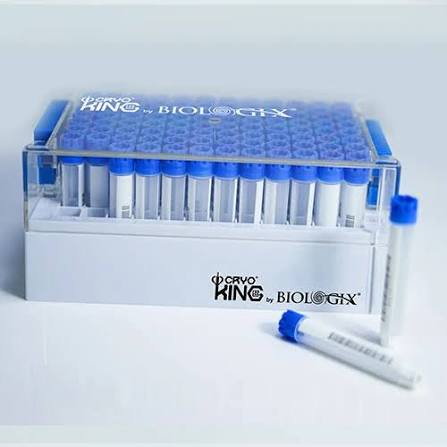
Cryogenic storage keeps cells, tissues and biological samples viable for long periods. The vial you choose and the way you handle it directly affect sample safety and the safety of your staff.
Choose vials made for cryo use
Use only vials that are rated for low-temperature storage. Ordinary tubes can become brittle and crack in the cold.
Internal or external thread?
Internal-thread vials reduce the contact area between the cap threads and the outside environment, which helps lower contamination risk. External-thread vials are easy to handle and widely used. Select the style that matches your protocol.
Prevent liquid nitrogen entering the vial
If liquid nitrogen seeps into a vial that is not designed for immersion, it can expand rapidly when the vial is warmed and may burst. For this reason many labs store samples in the vapour phase, or use vials that are specifically rated for liquid-phase storage.
Label for the cold
- Use labels and markers that are made to resist low temperatures and moisture.
- Write clear sample details such as ID, date and cell line.
- Keep a digital inventory so samples can be located quickly.
Freeze and thaw with care
- Cool samples gradually where your protocol requires controlled-rate freezing.
- Wear a face shield, cryo gloves and a lab coat when removing vials from storage.
- Avoid repeated freeze-thaw cycles by storing samples in small aliquots.
Good vial selection and careful handling protect both your valuable samples and your team.